How to Choose the Right Meditation Cushion for Your Practice
Choosing a meditation cushion is a personal decision. The right cushion should help you create a stable seat without forcing your body into a position that feels strained or unnatural. Your flexibility, preferred sitting position, body proportions, and desired firmness all matter more than appearance alone.
This guide explains the key features to consider when selecting a cushion that supports your practice—whether you are just beginning, returning to meditation, or establishing a regular home routine.
1. Begin With Your Natural Sitting Position
Before comparing materials or designs, consider how you normally sit. Many people meditate cross-legged, while others prefer kneeling, sitting with one leg in front of the other, or using a chair. There is no need to force yourself into a full lotus position. A sustainable posture is one you can maintain with steadiness and without sharp pain.
If you sit on the floor, notice the relationship between your hips and knees. When the knees remain noticeably higher than the hips, the pelvis may tilt backward, and the lower back may round. Raising the seat can make it easier for some practitioners to find a more balanced position. The ideal amount of elevation varies from person to person.
2. Choose a Height That Matches Your Flexibility
Cushion height affects how your pelvis, hips, knees, and feet meet the floor. People with tighter hips or longer legs may prefer more elevation. Those with greater hip flexibility may feel comfortable on a lower cushion.
A useful test is to sit near the front portion of the cushion rather than directly in the center. Allow the legs to rest naturally, and notice whether you can sit upright without holding the body rigidly. Your shoulders should soften, and your breathing should remain comfortable.
The Snazzy Jahzzie Premium Meditation Cushion measures 18 × 18 × 8 inches. Its elevated square design offers a broad sitting surface for a variety of seated positions. Because everyone is different, adjust your placement and use additional support under the knees or ankles as needed.
3. Consider the Cushion’s Shape and Sitting Surface
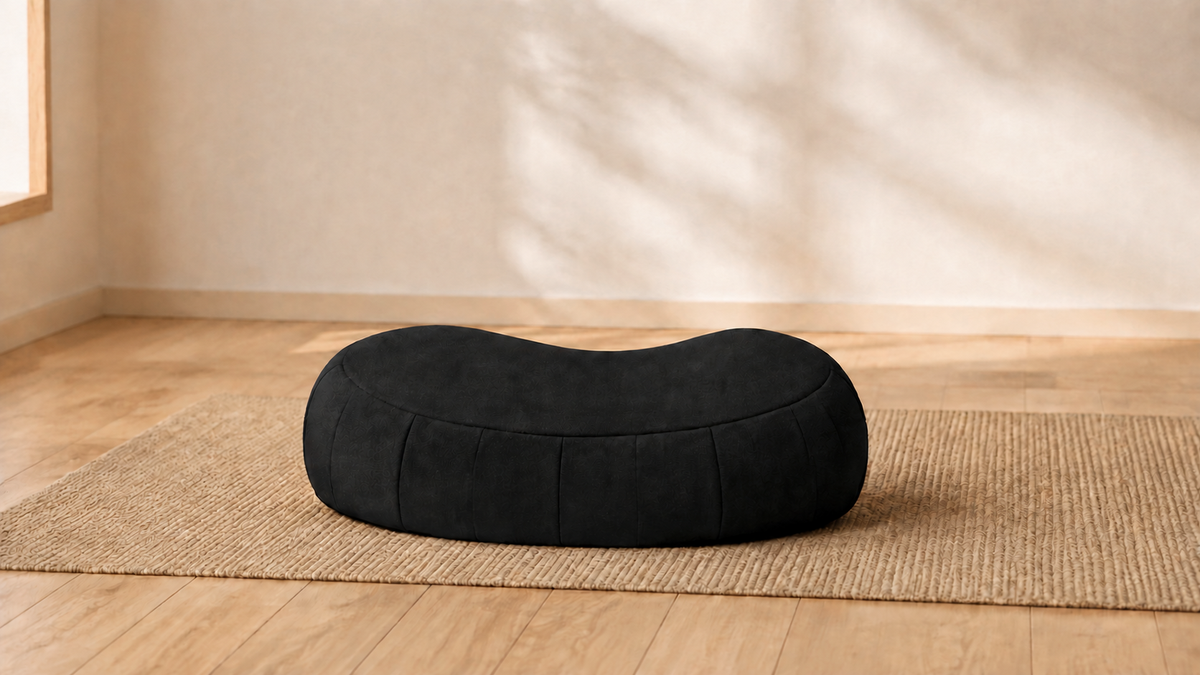
Meditation cushions come in several shapes. Round zafu-style cushions are traditional and compact. Crescent cushions can provide space around the thighs. Rectangular or square cushions offer a wider surface and can work well for cross-legged sitting, kneeling, prayer, breathwork, or general floor seating.
A larger sitting surface may be helpful if you like to adjust your position during practice. A compact cushion may be preferable when portability or limited storage space is the priority. The best choice depends on how and where you plan to use it.
4. Understand Buckwheat Filling
Buckwheat hulls create a firm, responsive filling. Instead of compressing like a soft household pillow, the hulls shift around the body and settle into place. This creates a grounded feeling while allowing small adjustments to the seat.
Someone who prefers a very soft cushion may find buckwheat firmer than expected. A practitioner who wants a stable, adaptable seat may appreciate that firmness. When comparing cushions, look at the complete construction—not only the filling—including the cover material, stitching, finished height, total weight, and overall dimensions.
The Snazzy Jahzzie cushion combines natural buckwheat hulls with a durable cotton cover and reinforced construction. It weighs 3.3 pounds, with a total shipping weight of 5.14 pounds.
5. Think About Your Meditation Space
Where will the cushion be used most often? A dedicated meditation room may allow you to keep a larger cushion in place. If you practice in different rooms or travel frequently, size and weight may become more important.
Color can also contribute to the atmosphere of a practice space. A simple black cushion blends easily with home décor, yoga rooms, retreat settings, and quiet corners without becoming visually distracting.
6. Test Comfort Without Forcing the Body
Once seated, take a few moments to observe the whole body. Check whether your weight feels evenly supported and whether your shoulders, jaw, and abdomen can soften. Mild stretching sensations may occur as the body adapts to floor sitting, but sharp pain, numbness, or worsening discomfort are signals to change position.
You may choose to place a folded blanket or flat mat beneath the cushion to support the knees, ankles, and feet. You can also meditate in a chair when floor sitting is not appropriate. The purpose of a cushion is to support practice—not to prove that you can hold a particular pose.
7. Match the Cushion to the Practice You Will Actually Maintain
The most useful meditation cushion is not necessarily the most elaborate one. It is the cushion you can use consistently and comfortably. Consider your usual session length, preferred posture, available space, desired firmness, and whether you will move the cushion regularly.
For practitioners seeking a broad, elevated seat with firm, adaptable filling, the Snazzy Jahzzie Premium Meditation Cushion offers a cotton-covered, natural buckwheat option designed for meditation, mindfulness, prayer, breathwork, yoga, and quiet reflection.
Frequently Asked Questions
Do beginners need a meditation cushion?
No special equipment is required to begin meditating. However, a cushion can make floor sitting more accessible by providing elevation and a defined place for practice. A chair is also a valid option.
Is buckwheat filling soft or firm?
Buckwheat hulls generally create a firmer seat than a soft household pillow. The hulls move and settle around the body, creating an adaptable but grounded surface.
Should my knees be lower than my hips?
Many practitioners find it easier to sit when the hips are slightly elevated, and the knees can descend naturally. This is not a rigid rule, and the most appropriate position depends on your body, mobility, and comfort.
Can I use a meditation cushion for breathwork or prayer?
Yes. A supportive floor cushion can be used for meditation, breathwork, prayer, mindfulness exercises, yoga, stretching, or quiet reflection.
What should I do if sitting becomes painful?
Change your position rather than forcing it. Try additional support, shorten the session, or use a chair. Persistent or significant pain should be discussed with a qualified healthcare professional.
Choose support that helps your body become steady—then allow the practice itself to remain simple.